Vademecum SPA - Exphera Wellness
The complete guide to saunas, Turkish baths, and whirlpools
Timing, order, physiological benefits and small mistakes to avoid, season by season
There's a popular belief worth debunking right away: no, you shouldn't give up saunas and Turkish baths in summer because "it's hot enough as it is." Once inside the cabin, the body has no perception of what's happening outside: the heat is always the same, whether it's July or January, and the benefits remain the same year-round.
Before you begin: hydration
An often overlooked detail: hydrate well before starting, with water or warm herbal teas. Your body will sweat a lot in the later stages, and arriving well hydrated will make a huge difference in your final result, as well as your safety throughout the entire journey.
The right order: starting with the hydromassage
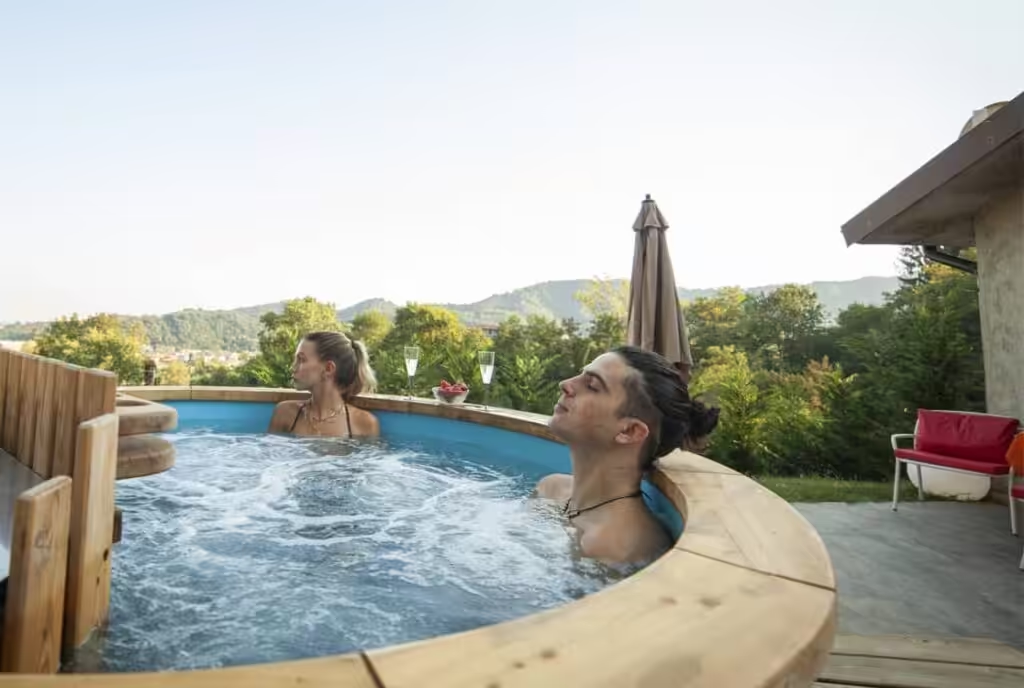
The only thing that really changes with the seasons is the temperature of the hot tub: we initially keep it cooler in our tubs in the summer, around 32-34 degrees, while during the rest of the year we immediately increase it to 36-38 degrees. In both cases, it's best to start right there, with the water: in summer because it releases the stress accumulated by the heat outside and relaxes the mind in a pleasant environment; in winter because a temperature close to body temperature gradually prepares the body for the temperature changes that will come later.
Then the Turkish bath, lastly the Finnish sauna
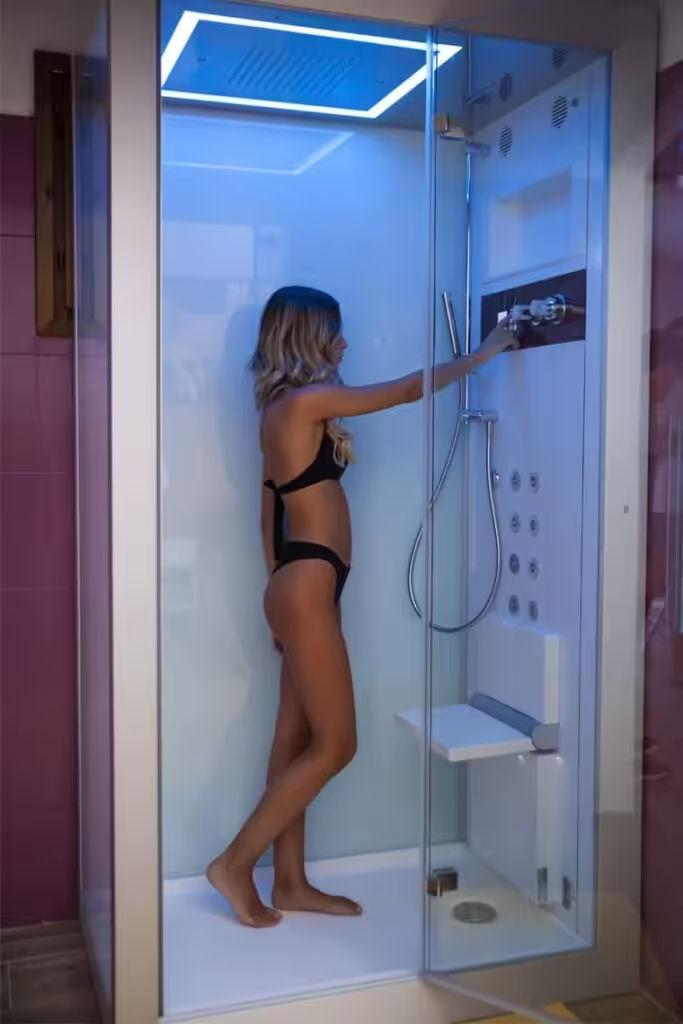
After the hydromassage, the next step is the Turkish bath, or hammam: 30-50 degrees, 100% humidity.
It's the right choice for an opening because it's less stressful on the heart than a Finnish sauna. It dilates blood vessels, opens the pores and airways, and essentially prepares the body for the deeper sweating that comes later with the dry heat of the sauna. Ten to 20 minutes are enough, followed by a refreshing shower (slightly cool, not cold) to lower your body temperature, followed by a moment of rest, another 10 to 15 minutes sitting or lying down, to allow the cardiovascular system to calmly rebalance.
The Finnish sauna and the Löyly ritual: what really happens to the body
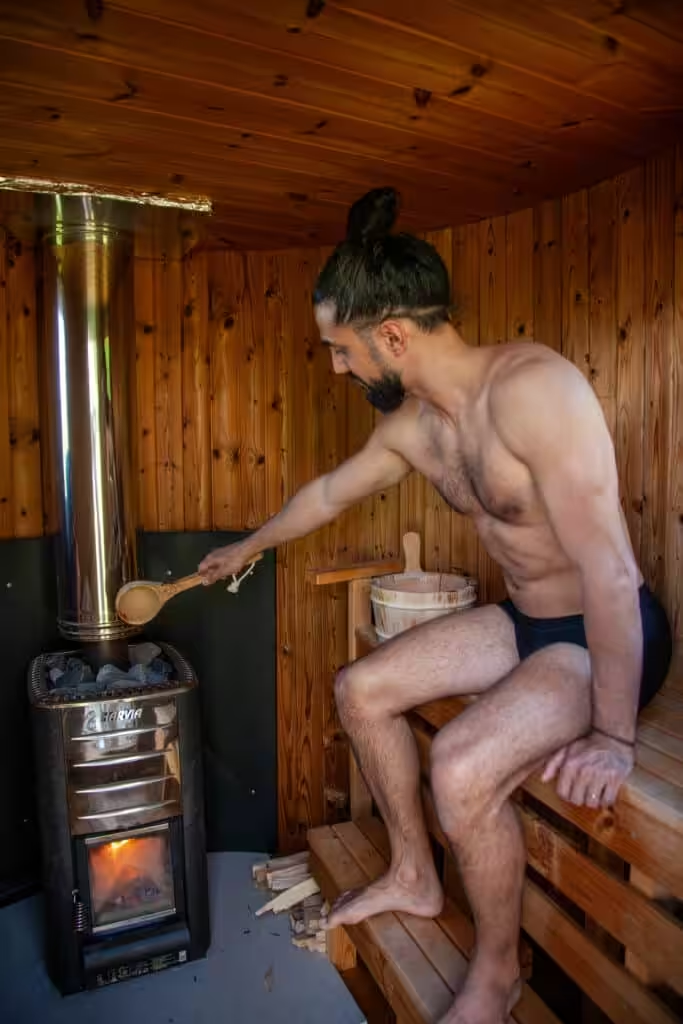
Caution: This should not be confused with an infrared sauna, which we'll discuss later. This involves dry heat, between 75 and 85 degrees, with minimal humidity, and a recommended duration of 10 to 20 minutes, depending on your personal fitness level. Exphera Romantic is Exphera Wellness They have an electric Finnish sauna. When booking, you can optionally add a second Finnish sauna, heated by a wood-burning stove and an open fire. This sauna has an outdoor tub, called an Ofuro, filled with water cooled to 10-20 degrees Celsius (50-68 degrees Fahrenheit) depending on your workout. This tub serves as a post-sauna relaxation tank, as explained below.
Inside the cabin you will always find a ladle and a bucket of water: they are there for the Loyly, the "breath of life" of the Finnish sauna, the act of slowly pouring water onto the hot stones. Unlike the Central European tradition of Aufguss, where a sauna master manages every step for everyone, here the decision is yours: you listen to your body and choose when and how much.
During the first part of the session, it's best to leave the sauna dry, without pouring water, giving your body time to adjust to the heat until you begin to sweat profusely. From then on, beginners can limit themselves to just one Löyly in the last five minutes; more experienced sauna users can repeat it two or more times. This should be done slowly, one or two ladles at a time, poured slowly to avoid burning yourself on the instantaneous steam. If you want to add essential oils, always mix them with the water and never pour them pure onto the stones: they risk catching fire. You can repeat another ladle every couple of minutes, gradually increasing the sensation of heat, but in the last two minutes, it's best to pause, let your body stabilize, and prepare for the exit.
This is where Löyly stops being simple folklore and becomes what it truly is: a short, controlled physiological stress with measurable effects on multiple body systems, one after the other.
As the water hits the hot stones, the relative humidity in the cabin suddenly rises above 50%. This prevents sweat from evaporating from the skin, and with evaporation blocked, the body's natural cooling mechanism also stops: the skin temperature rapidly rises several degrees, dragging the internal body temperature with it. The result is a condition that simulates, for a few minutes, the effects of an induced fever, enough to activate a response from the immune system.
The cardiovascular system responds immediately: superficial blood vessels dilate markedly to divert blood flow to the skin and promote heat loss. To compensate for this vasodilation, the heart rate increases to 100-150 beats per minute, a rate comparable to that of a moderate-intensity cardiovascular workout, even while remaining stationary.
On the skin and respiratory front, the sweat glands still work at maximum capacity, promoting ample drainage of fluids and toxins through sweating, although this is ineffective at reducing body temperature. The pores fully dilate, allowing the removal of dead surface cells and improving tissue elasticity and blood flow over time. The warm, humid air we breathe acts as a natural aerosol: it reduces airway congestion, thins mucus, and relaxes bronchial muscles.
Then there's a more specifically neurochemical response: the controlled thermal stress the body is subjected to—a phenomenon physiology calls hormesis—induces the production of endorphins, which block pain receptors and generate that widespread feeling of well-being you experience upon exiting the cabin. At the same time, the heat spike stimulates the synthesis of heat shock proteins, whose job is to repair protein damage at the cellular level, helping protect muscle mass and counteract oxidative stress over time.
In short, Löyly transforms what might seem like a simple passive heat bath into a real vascular and cellular workout for the body.
Cold contrast: the second physiological driver of the cycle
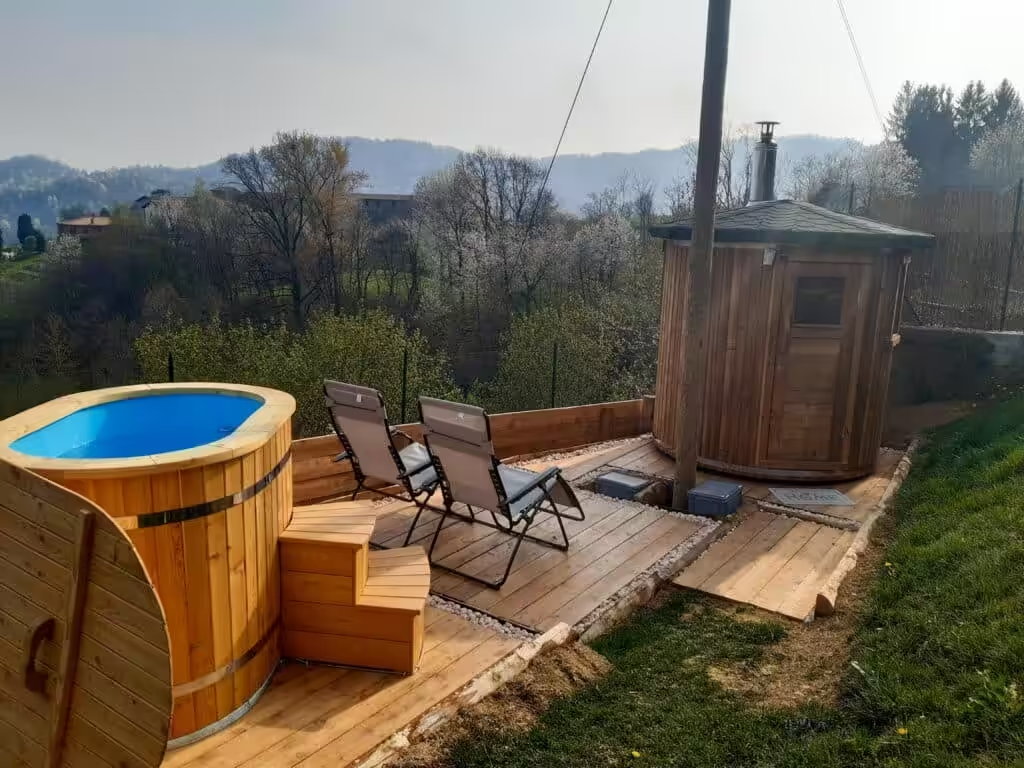
Immediately after the sauna, a sharp contrast is needed: total immersion, head included, in cold water, between 10 and 15 degrees Celsius (up to 20 degrees Celsius for beginners), for one or two minutes. This isn't an optional detail; it's the phase that completes the cycle and amplifies its effects, with its own equally precise physiology. Without a cycle of cold contrast, migraines sometimes follow due to excessive vasodilation that isn't stopped in time.
The impact of cold water causes immediate vasoconstriction of the superficial blood vessels: the body, to protect its internal temperature, rapidly diverts blood to the vital organs. It is precisely this alternation between the vasodilation of heat and the vasoconstriction of cold that acts as a true circulatory pump, a passive training of the blood vessels that, when repeated over time, improves their elasticity and peripheral microcirculation.
On a cardiac and respiratory level, the first contact with cold water triggers the so-called cold shock reflex: a sudden acceleration of the heartbeat and breathing, followed—once the initial moment has passed—by a profound and marked slowing of both.
From a neurological perspective, cold slows the conduction rate of pain signals along nerve fibers, providing almost immediate relief to tired muscles and joints. The strong vasoconstriction also promotes lymphatic drainage and accelerates the removal of lactic acid and other waste products accumulated in muscle tissue.
There is also an effect on mood and mental clarity: exposure to the cold stimulates the sympathetic nervous system, causing a release of norepinephrine and dopamine, the two neurotransmitters linked to energy, attention, and concentration—hence the almost immediate feeling of clarity you experience as soon as you get out of the water.
On a metabolic level, to counteract heat loss, the body activates brown adipose tissue, a metabolically highly active type of fat that burns calories to produce heat. Some studies also report an increase in the number of white blood cells, particularly lymphocytes and monocytes, after repeated exposure to cold water, a signal associated with increased immune system reactivity.
Finally, an effect worth knowing: in the phase immediately following the sauna, thanks to the reduction in peripheral vascular resistance, it is completely normal to experience a brief period of hypotension, a transient drop in blood pressure. It is precisely this phase, often described by guests as the most beautiful part of the entire experience, that marks the entrance into the deep relaxation that concludes the cycle.
Our technique for relaxing after a cold bath
After extensive personal testing, over the years we've refined our own little technique for making the most of the minutes following a cold bath, and it's a step worth detailing.
As soon as we emerge from the water, we wrap ourselves tightly in our bathrobe, with a towel over our legs as well, and sit on our reclining chaise longues. For the first thirty seconds, we remain with the backrest upright and our head tilted forward. Then, quickly, we tilt our head back as far as possible, almost as if we were looking up at the sky above us. Within seconds, the blood rapidly drains from our head to the rest of our body, and an immediate and profound feeling of relaxation sets in, similar to a slight faintness, and it's very pleasant: it's normal, part of the experience, and there's nothing to worry about.
It's precisely at this moment that the chaise longue reclines, bringing the entire body into a horizontal position with the legs slightly raised above heart level. From there, you enter, almost without realizing it, a phase of total physical and mental relaxation.
You stay in this position for as long as you like—on average, between 20 and 30 minutes—letting yourself go, listening to your heartbeat naturally slowing down minute by minute. In winter, when you start to feel cold again, you can take a few minutes back to the sauna to warm up before ending the session.
How long does a complete cycle last, and how to structure it
Between the time in the cabin, shower, and rest, each phase (Turkish bath or sauna) takes an average of 30-45 minutes. Combined, a complete cycle takes about 1-2 hours. The ideal sequence, from start to finish, is this:
- Warm shower
- hydromassage
- Turkish bath
- Refreshing shower
- Rest
- Finnish sauna
- Cold immersion or shower
- Final rest
A single cycle is already enough to benefit from all the effects described above, but if you have time you can repeat just part of it before dinner.
What time is best to do it, and when should it be avoided?
The absolute best time is in the afternoon: at least a couple of hours after your last large meal, so as to release the day's stress and also promote a deeper night's sleep. Ideally, you should finish the cycle about an hour before dinner.
In the morning, things are different: it's better to just enjoy the hydromassage, for a gentle and gradual awakening, or treat yourself to the sauna as an energizing boost after a light breakfast, provided you take dips or cold showers to tone the body and chase away the torpor left by the heat.
After dinner, however, it's best to avoid it: high temperatures draw blood to the skin, drawing it away from the stomach, and this can lead to indigestion, dizziness, or drops in blood pressure just as the body should be digesting. There is one exception, but it should be treated with caution: a very light dinner, low in protein and fat, consumed at least two hours before. In general, however, high temperatures in the late evening delay the release of melatonin, the hormone that regulates sleep: to fall asleep properly, body temperature needs to drop, not rise, so the afternoon is always the most sensible option.
Pay attention to your body's signals and who is not indicated for
If you experience an unusually rapid heartbeat, dizziness, or nausea while in a steam bath or sauna, leave immediately and sit or lie down in a cool place. If the sensation doesn't pass within a few minutes, seek medical attention.
Saunas and Turkish baths are not recommended for those with cardiovascular problems, angina, a heart attack in the last six months, or aortic stenosis. They are also not recommended for pregnant women, those under the influence of alcohol or drugs, those with fever, acute joint pain, silicone implants, diabetes, epilepsy, or significant respiratory problems.
If you take medications such as antihistamines, anticoagulants, or vasodilators, the advice is always the same: talk to your doctor first.
Avoid starting the route within two hours of a heavy meal or if you are dehydrated.
In short: what a complete cycle leaves the body
Together, dry heat, Löyly and cold contrast act as a passive and complete training for the organism:
- Cardiovascular system — heart rate up to 150 beats per minute in the sauna, followed by a sharp slowdown in the cold immersion: an alternation that over time improves the elasticity of the vessels and microcirculation
- Immune system — the heat spike simulates a mild fever response, the cold increases the production of white blood cells: two complementary stimuli for the body's natural defenses
- Nervous system — endorphins released in the heat, noradrenaline and dopamine in the cold: the chemical mix behind the feeling of well-being and clarity at the end of the journey
- Skin and muscular system — deep sweating promotes fluid drainage and skin regeneration, while the cold accelerates the elimination of lactic acid in the muscles
It is the combination of these mechanisms, not a single step, that makes the sauna-cold cycle such a complete ritual that the body remembers for hours after experiencing it.
Löyly: the physiological response point by point
- Relative humidity — suddenly rises above 50%, preventing the evaporation of sweat and therefore the natural cooling of the skin
- Body temperature — the skin temperature rises rapidly, dragging the internal temperature with it: a condition that simulates a mild induced fever for a few minutes, sufficient to activate a response of the immune system
- Cardiovascular system —superficial blood vessels dilate to divert blood flow to the skin; heart rate increases to 100-150 beats per minute, comparable to moderate-intensity cardio training
- Sweat glands and skin — they work at maximum capacity, promoting ample drainage of liquids; the pores dilate completely, removing dead cells and improving the elasticity and blood flow of the tissues.
- Respiratory system — the warm, humid air acts as a natural aerosol, reducing airway congestion, thinning mucus, and relaxing bronchial muscles
- Neurochemical response — controlled thermal stress (hormesis) induces the production of endorphins, which block pain receptors and generate a general feeling of well-being
- Cellular repair — the heat spike stimulates the synthesis of heat shock proteins, which repair protein damage, protect muscle mass and counteract oxidative stress
Cold contrast: the physiological response point by point
- Immediate vasoconstriction —superficial vessels suddenly constrict, diverting blood to vital organs to protect core temperature
- Circulatory pump — the alternation between vasodilation (heat) and vasoconstriction (cold) trains the blood vessels, improving their elasticity and peripheral microcirculation over time
- Cold shock reflex — sudden acceleration of heart rate and breathing, followed by a profound slowing of both once the initial impact has passed
- Pain modulation — cold slows the conduction of pain signals along nerve fibers, providing almost immediate relief to muscles and joints
- Drainage and disposal — the strong vasoconstriction promotes lymphatic drainage and accelerates the removal of lactic acid and other muscle metabolites
- Neurochemical response — exposure to cold activates the sympathetic nervous system, with the release of noradrenaline and dopamine: hence the lucidity and energy perceived immediately afterwards
- Metabolic activation —the body activates brown adipose tissue to produce heat, burning calories in the process
- Immune response — repeated exposure to cold is associated with an increase in white blood cells (lymphocytes and monocytes), a sign of increased reactivity of the immune system
- Post-sauna phase — the reduction in peripheral vascular resistance leads to a brief drop in blood pressure (transient hypotension), the entry into the deep relaxation phase which closes the cycle
What about the infrared sauna?
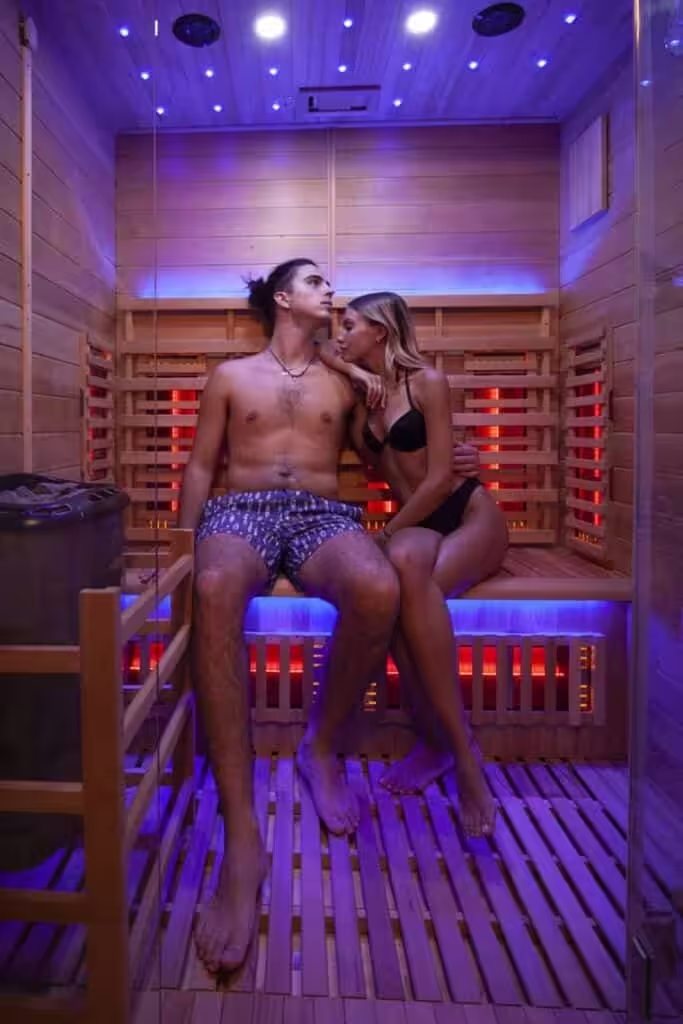
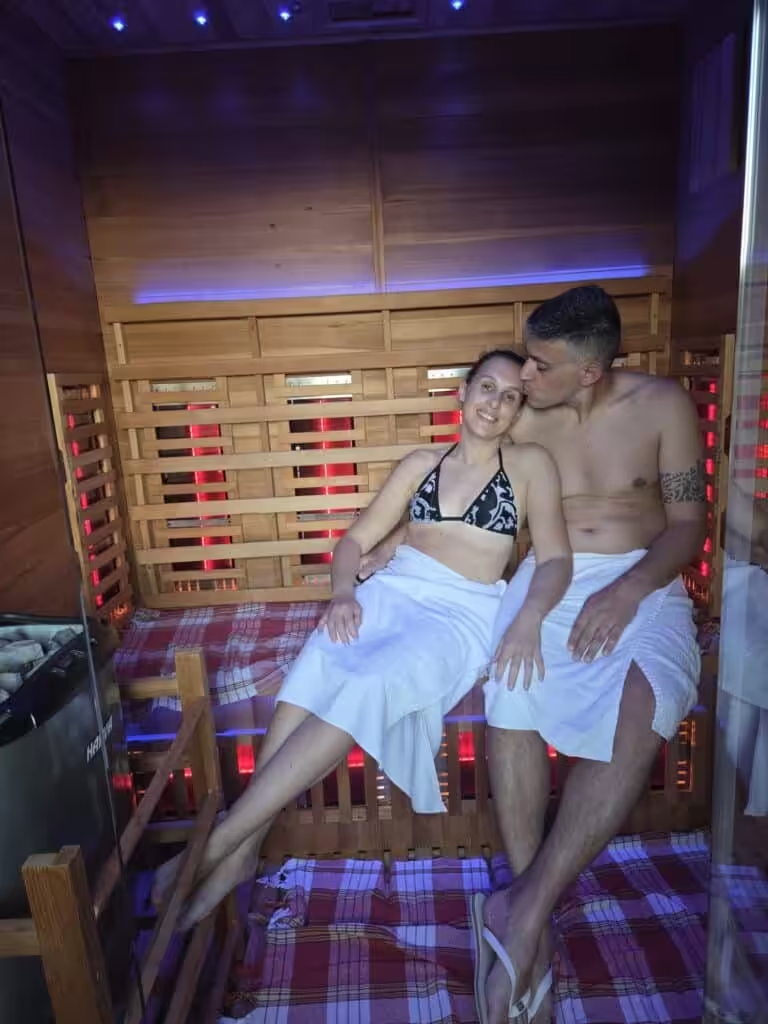
It's a different world, one worth exploring. Instead of a stove and hot stones, radiant panels emit waves that directly heat the body's surface, penetrating just a few centimeters, while the cabin air remains much milder, typically between 40 and 50 degrees Celsius.
It's an excellent solution for relieving muscle and joint pain, relaxing the mind in a much more comfortable environment than a Finnish sauna, and it also appears to have positive effects on the skin, improving its elasticity and stimulating collagen production.
Since it does not significantly raise the internal body temperature, it does not require a subsequent cold shower: it is therefore a simpler session to tackle, suitable for those approaching this world for the first time or for those who struggle with extreme temperatures, but with more limited benefits than the complete cycle of Finnish sauna, Löyly and cold contrast.
In Exphera Each wellness program is experienced in complete privacy, just you and your loved ones, without imposed timetables or shared common spaces.
If you want to try this cycle calmly, in your private bubble under the stars, book one of our experiences su https://exphera.it
Sources
- Harvia Group — harviagroup.com (https://harviagroup.com/new-finnish-study-challenges-global-sauna-norms-humidity-is-as-crucial-as-heat-for-health-benefits/)
- Asmana — asmana.it (https://www.asmana.it/sauna-finlandese-i-benefici-del-calore/)
- Discovery Journals — discoveryjournals.org (https://discoveryjournals.org/medicalscience/current_issue/v29/n161/e114ms3604.pdf)
- YabeBeauty — yabebeauty.com (https://www.yabebeauty.com/benefici-acqua-fredda-pelle-corpo/)
- Yonsei Medical Journal (https://www.eymj.org/DOIx.php?id=10.3349/ymj.2006.47.4.485)